ROOM I

Artifacts & Ergonomics

Moving beyond the aesthetic. We decode the mechanical utility, the ancient risk management, and the cultural psychology embedded in classic Type A jadeite forms.

The Strategist & The Traveller

The Thumb Ring

扳指 / 板戒 (Banzhi)

Originally a raw, utilitarian piece of military equipment worn by archers during the Shang dynasty to protect the thumb from the violent snap of heavy bowstrings.

During the Qing Dynasty, it transitioned into the ultimate aristocratic status symbol. Emperors and noblemen wore oversized jadeite variants to signal that they possessed absolute authority without needing to do physical labour.

Cinematic Trivia: The TVB Villain Trope

In Asian historical dramas, the Banzhi is famously used as the ultimate prop for the scheming official. Right before plotting a sinister move, the camera inevitably catches them slowly spinning their heavy jade thumb ring. While a trope, it reflects reality: turning the heavy ring was a physical grounding mechanism for men engaged in deep, calculating thought.
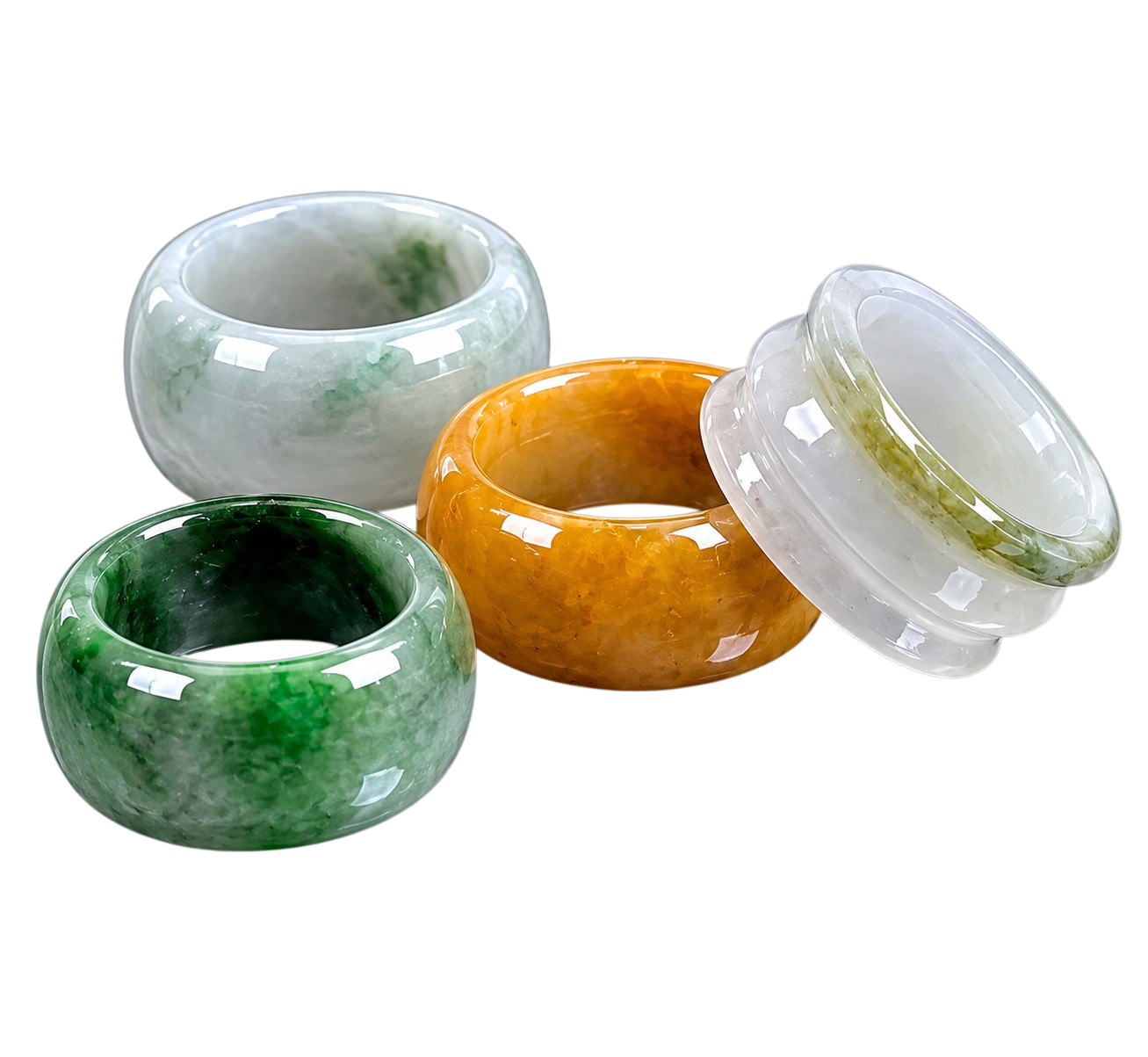
Type A Jadeite Banzhi Thumb Ring

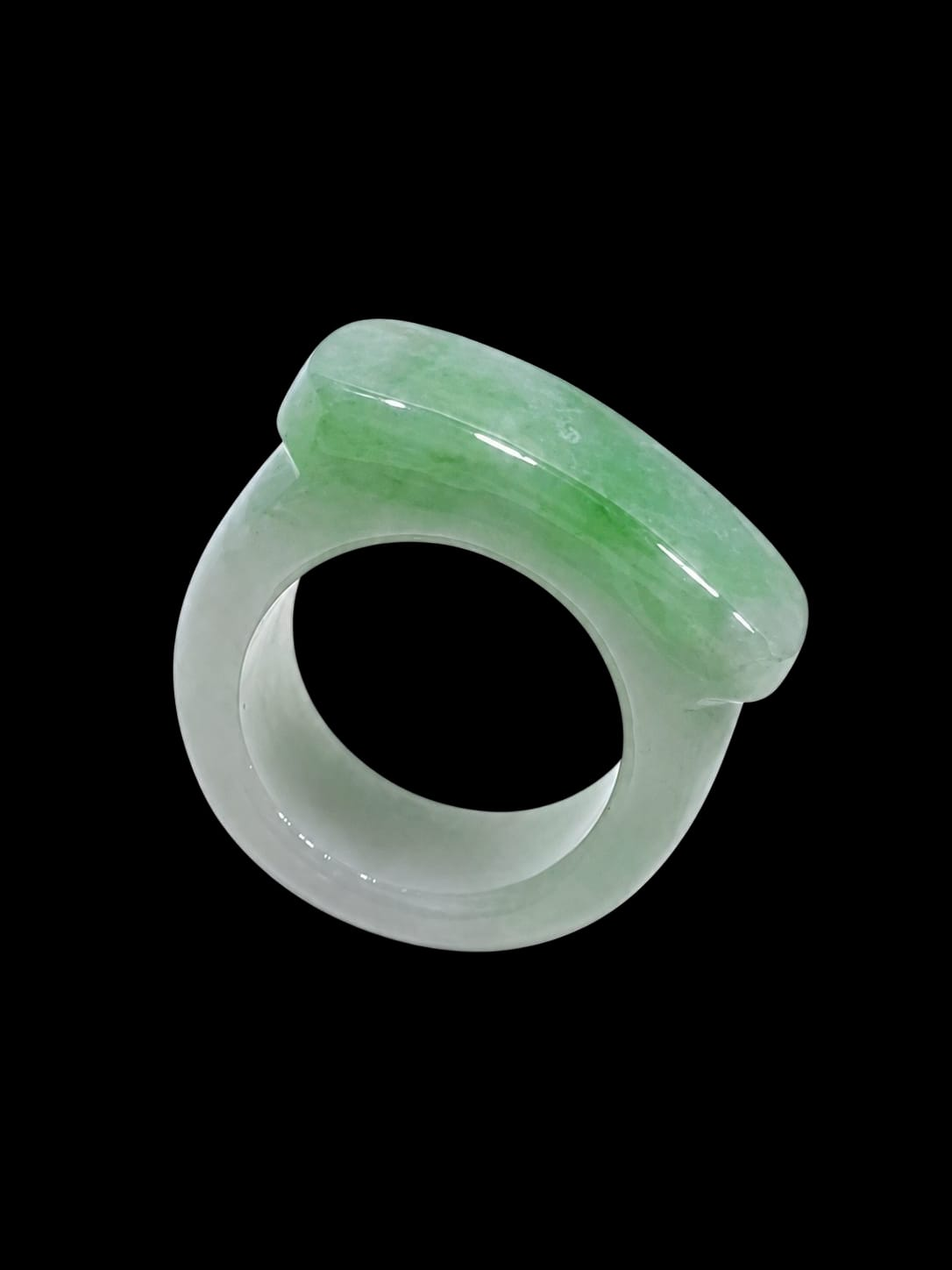
The Saddle Ring

馬鞍戒 (Ma An Jie)

Developed by nomadic horsemen, the shape directly mirrors the saddle of a horse. It was the ultimate traveller's ring, worn by high-ranking couriers traversing ancient trade paths.

Ergonomically, it is an aerodynamic masterpiece. The curved top face sits completely flush against the hand, meaning it has zero catching points—making it practically impossible to snag on luggage or clothing during transit.

Type A Jadeite Saddle Ring

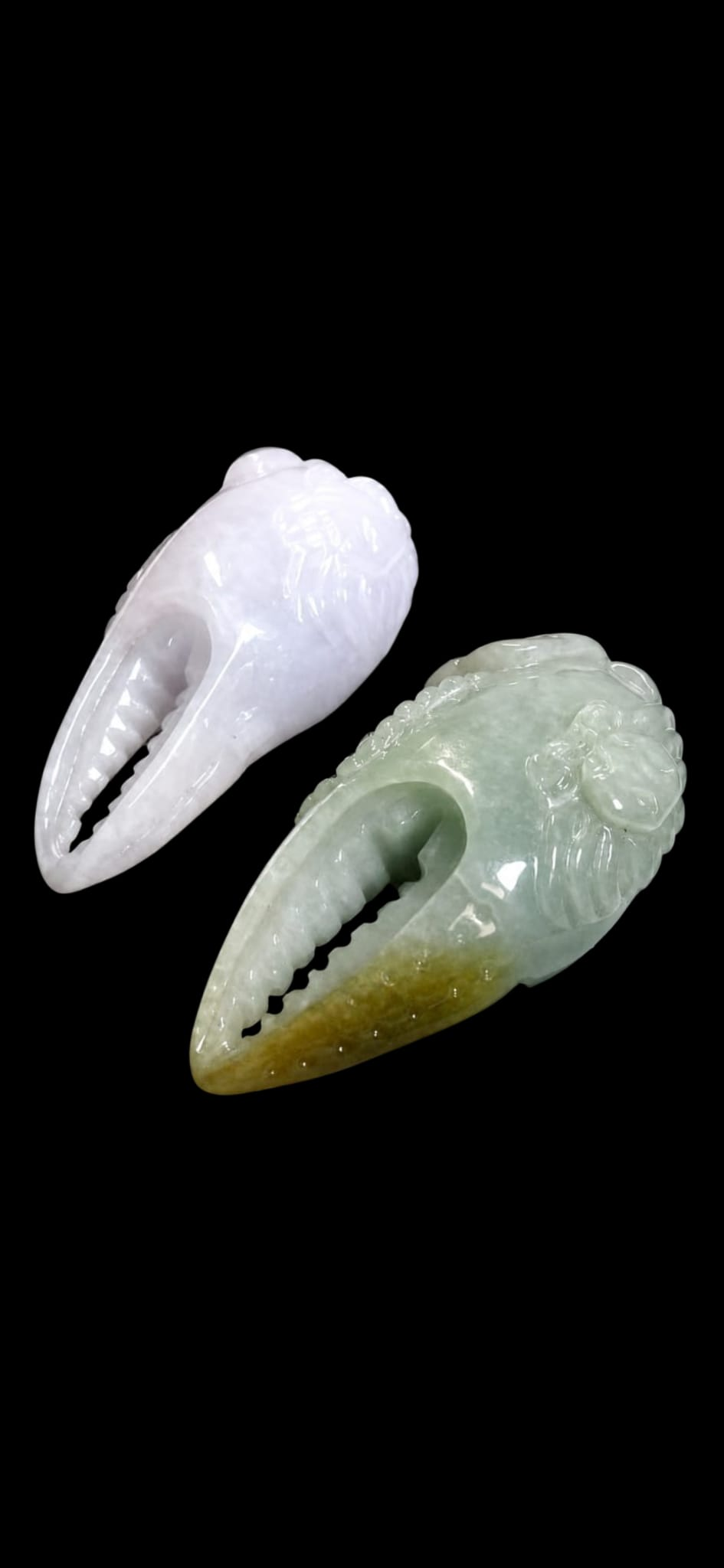
The Crab

螃蟹 (Pang Xie)

Deeply tied to the imperial examination system. Scholars travelling to the capital carried crab carvings as a quiet declaration of intent to score the highest rank.

The Chinese character for a crab's shell is Jia (甲), a direct homophone for "First Place" or "Top Tier" (大甲). Because the crab walks sideways, it symbolises traversing the corporate world unhindered and dominating an industry.

Jadeite Crab Carving

The Protectors & The Guides

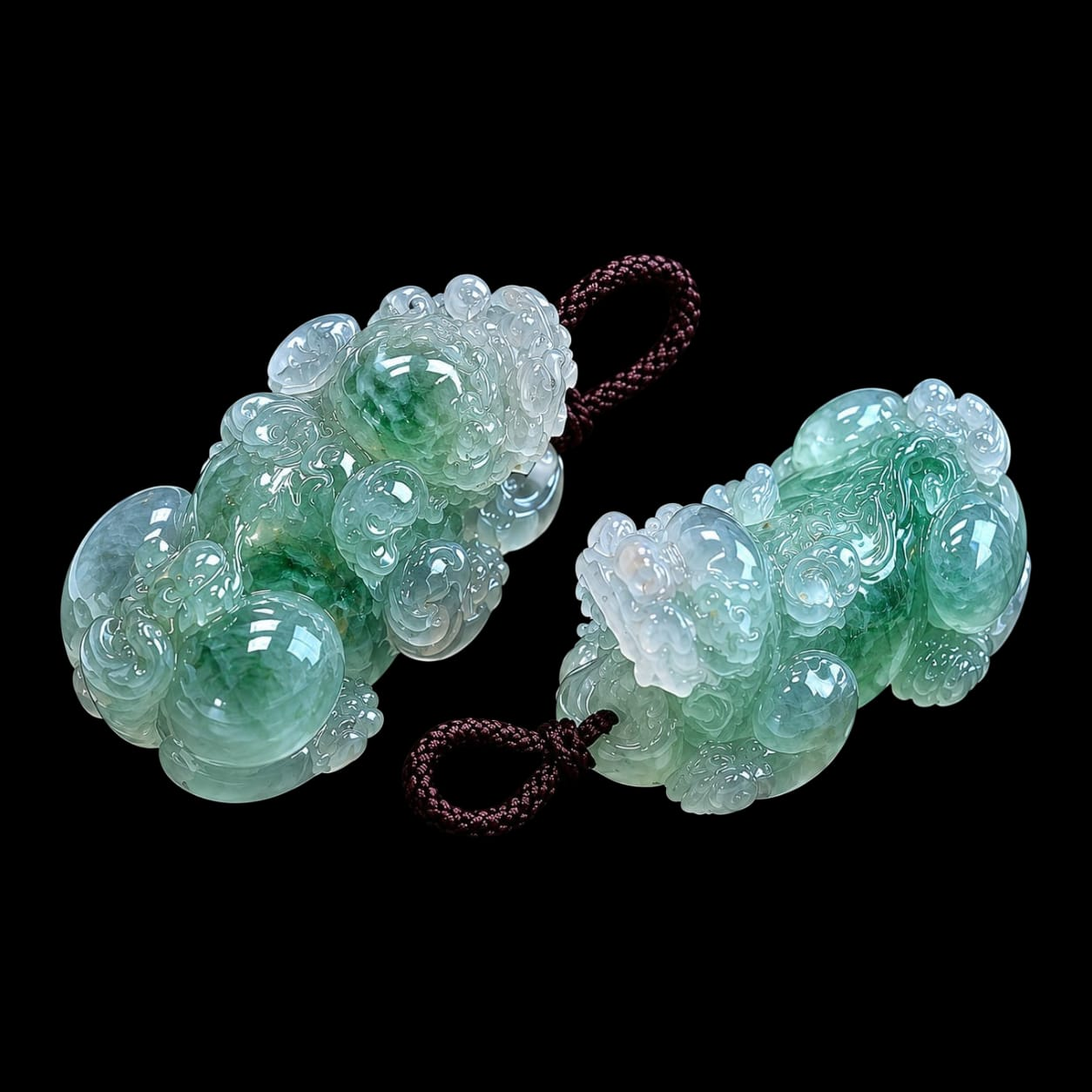
The Pixiu

貔貅 (Pixiu)

A celestial hybrid creature and the ultimate symbol of capital preservation. Sculpted with a heavy, muscular stance, it serves as a tactile anchor against reckless financial decisions.

Mythology: The Emperor God's Slap

Legend states the Pixiu overate gold and accidentally soiled the heavenly palace. A furious Jade Emperor slapped the creature’s backside so hard it sealed shut forever. Thus, wealth comes in from all directions, but can never leak out.

Jadeite Pixiu Carving

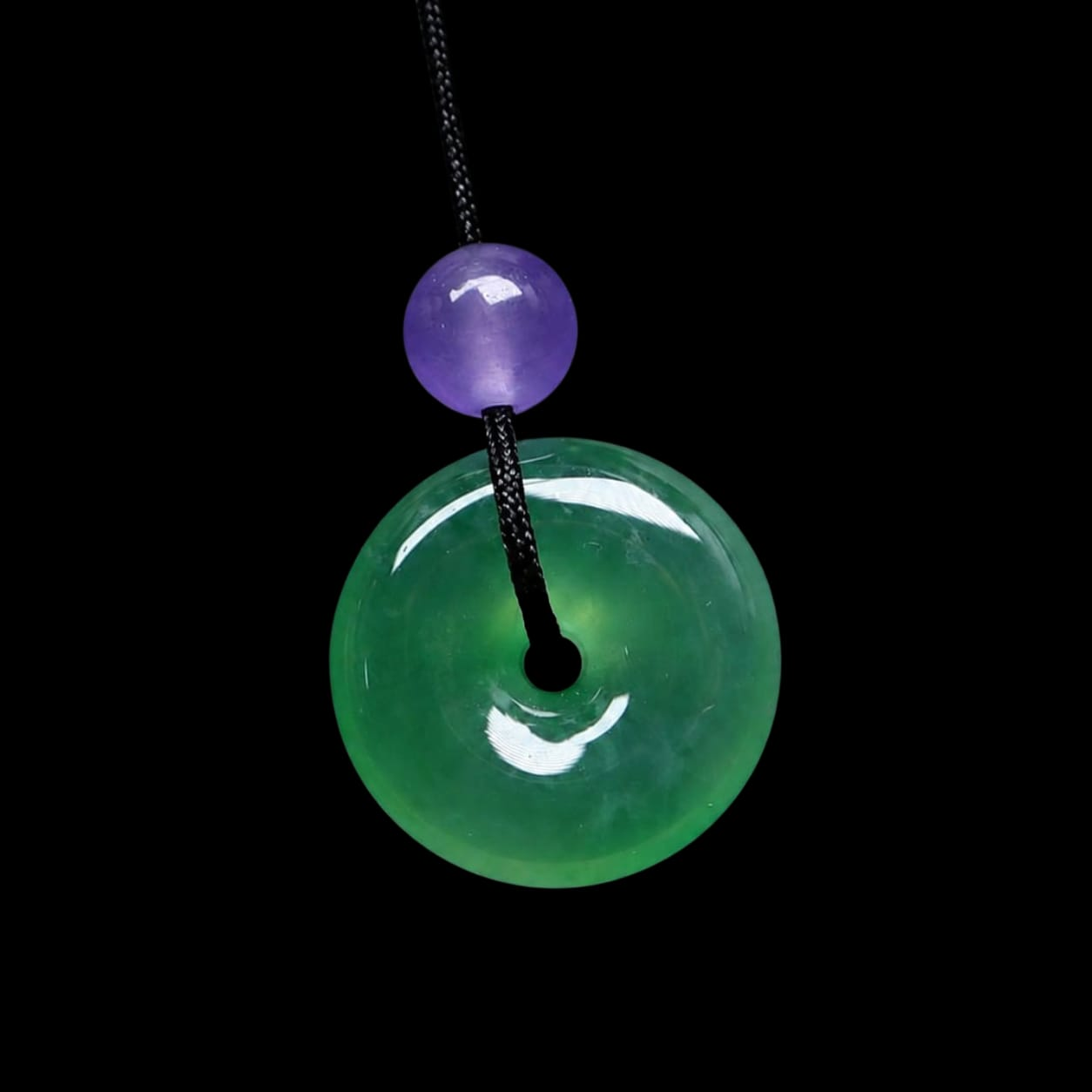
The Safety Coin

平安扣 (Ping An Kou)

Derived from ancient ritual jade discs, this is structurally the most perfect piece of wearable engineering ever devised. A flat, circular plane with flawlessly radiused edges that sits flush against the chest, dispersing all physical impact energy.

Cultural Trivia: The Asian Grandmother Talisman

Because of its zero-sharp-edge geometry, the Ping An Kou is the cultural equivalent of wrapping a child in bubble wrap. Almost every child in a traditional household has had a miniature version tied to them with a red rattail cord before facing the outside world.

Jadeite Ping An Kou

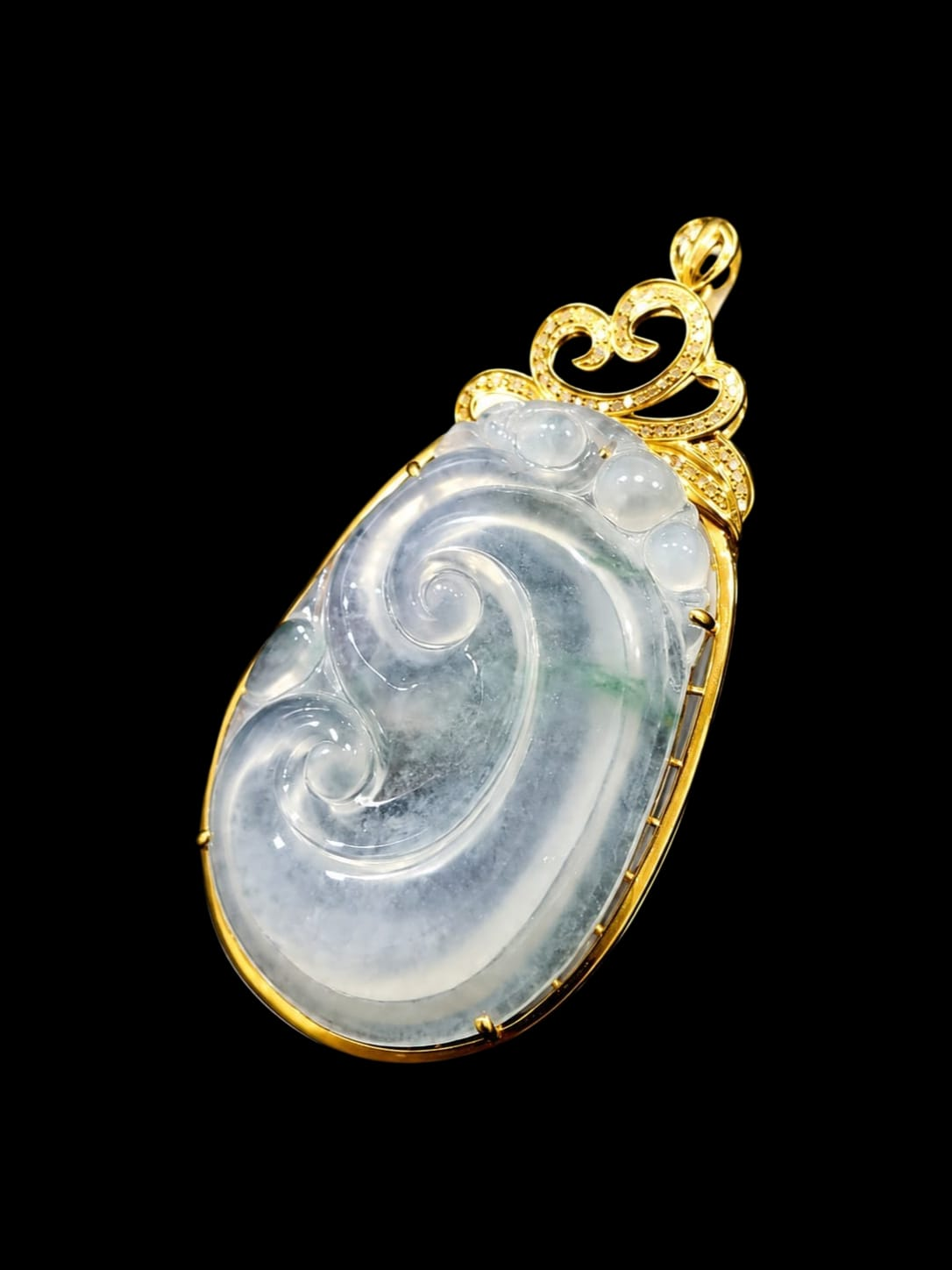
The Ru Yi

如意 (Ru Yi)

Held by emperors and generals, the Ru Yi Sceptre signalled high executive rank. Its smooth S-curve design contours elegantly without severe structural stress points.

Historical Trivia: The Ultimate Glow-Up

The Ru Yi represents history’s greatest functional "glow-up." Before it became the supreme symbol of absolute, untouchable heavenly authority, it evolved from the humble ancient backscratcher. The name literally translates to "As you wish"—which makes perfect sense when you finally reach that impossible itch.

Jadeite Ru Yi

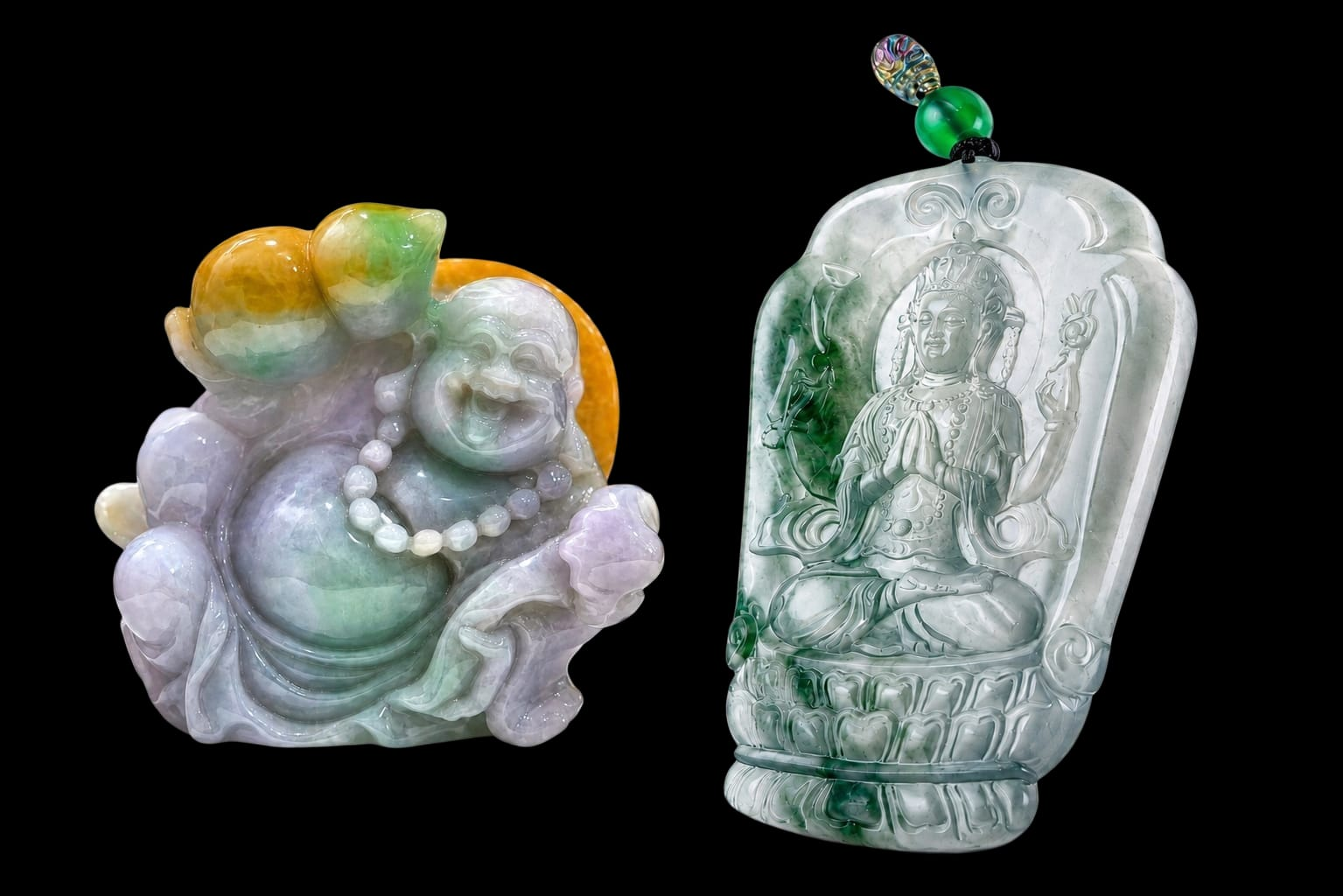
Guanyin & The Laughing Buddha

觀音與笑佛 (Guanyin & Xiao Fo)

Classical figures of compassion and ultimate contentment. The Buddha's broad, dome-like belly provides massive material thickness, making it exceptionally durable against front-facing impacts.

Inside specific carved pendants is actually Guanyin, worn traditionally by men to anchor their tempers, while women wore the Laughing Buddha. The philosophy of Da Du Neng Rong (a belly wide enough to tolerate all things) served as a daily mental anchor to laugh off the intense micro-politics of running ancient, large households.

Type A Jadeite Guanyin Pendant

Curator's Notes: Symbolism FAQ

What does a jadeite Pixiu symbolise?

The Pixiu represents absolute capital preservation. In mythology, it consumes gold but never excretes it, symbolising wealth that enters your portfolio and never leaves.

What is a Banzhi jade thumb ring?

Originally functional archer's gear, the Banzhi evolved into a massive, heavy ring worn by Qing Dynasty nobles to project executive authority and wealth.

Why is the Ping An Kou so popular in Singapore?

Also known as the Safety Coin, the Ping An Kou's flawlessly smooth edges and dense microcrystalline structure make it the perfect daily talisman to absorb impact and ward off misfortune.

WhatsApp Us
Book Adventure